General Overview of the Monasteries in Paros
The monasteries of Paros were once significant spiritual, cultural, and economic centers. According to records, during the Ottoman period there were about 35 monastic communities operating on the island, while today most of them survive as historical monuments. Architecturally, the monasteries are usually built in remote or semi-mountainous locations, often overlooking the sea or the island’s interior, surrounded by high stone walls and monks’ cells. They housed libraries, craft workshops, and churches decorated with frescoes and icons that bear witness to the Byzantine and post-Byzantine heritage of the island. Their development coincided with the flourishing of marble craftsmanship-Paros being the island of the famous Parian marble-providing economic support for the monastic complexes. In conclusion, monastic life in Paros was a point of attraction not only for local believers but also for travelers interested in religious, artistic, and historical experiences.
Selection of Notable Monasteries
One of the most well-known monasteries on the island is Logovarda Monastery, located about 5 km northeast of Parikia.
Logovarda Monastery was founded in 1638 and is dedicated to the Life-Giving Spring. It stands out for its white Cycladic architecture, its church adorned with frescoes, and its library, which houses old manuscripts.
Another notable example is the Monastery of Agios Ioannis Detis, located within Paros Environmental Park. Although it is not fully operational, it offers impressive views and a strong sense of monastic seclusion.
Finally, the island’s most central church, Panagia Ekatontapyliani, also known as the “Church of the Hundred Doors,” although not a monastery in the strict sense, is a monastic ecclesiastical complex that hosted monks and nuns in the past.
Together, these sites compose the image of an island where religious life, whether monastic or parish-based, is an integral part of its cultural identity.
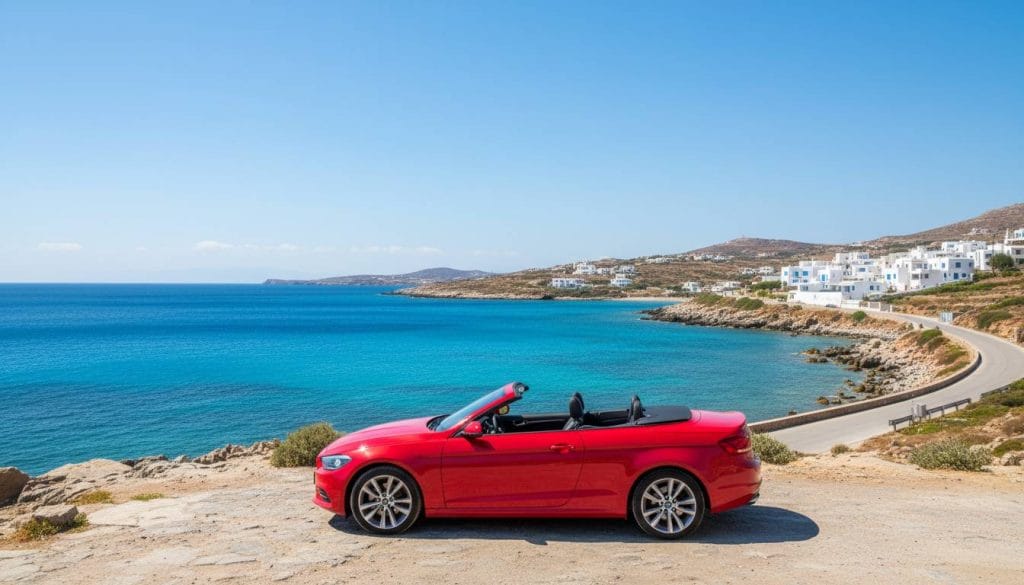
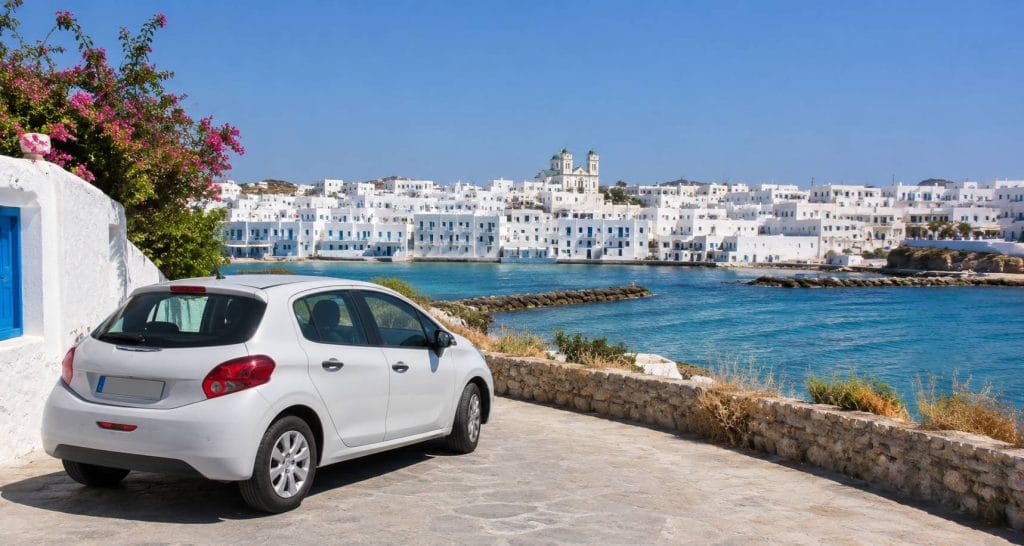
Public transportation on the island of Paros does not adequately serve access to most monasteries. To visit them, if you do not have your own vehicle, renting a car is essential.
Historical Background and Veneration of Saint Phocas
Saint Phocas, known as Phocas the Gardener, is a Christian martyr from Sinope on the Black Sea. Tradition tells that he tended his garden, shared its fruits with the poor, and when his persecutors came searching for him, he welcomed them, revealed his identity, and even showed them the grave he had prepared for himself. He was later martyred for his faith. Saint Phocas is considered the protector of sailors and travelers because of his association with the sea and his miraculous interventions in maritime events. In Paros, dedicating this chapel to him symbolizes the island’s deep connection to the sea, the harbor of Parikia, and the spiritual protection of seafarers.
Special Reference to Agios Fokas in Parikia
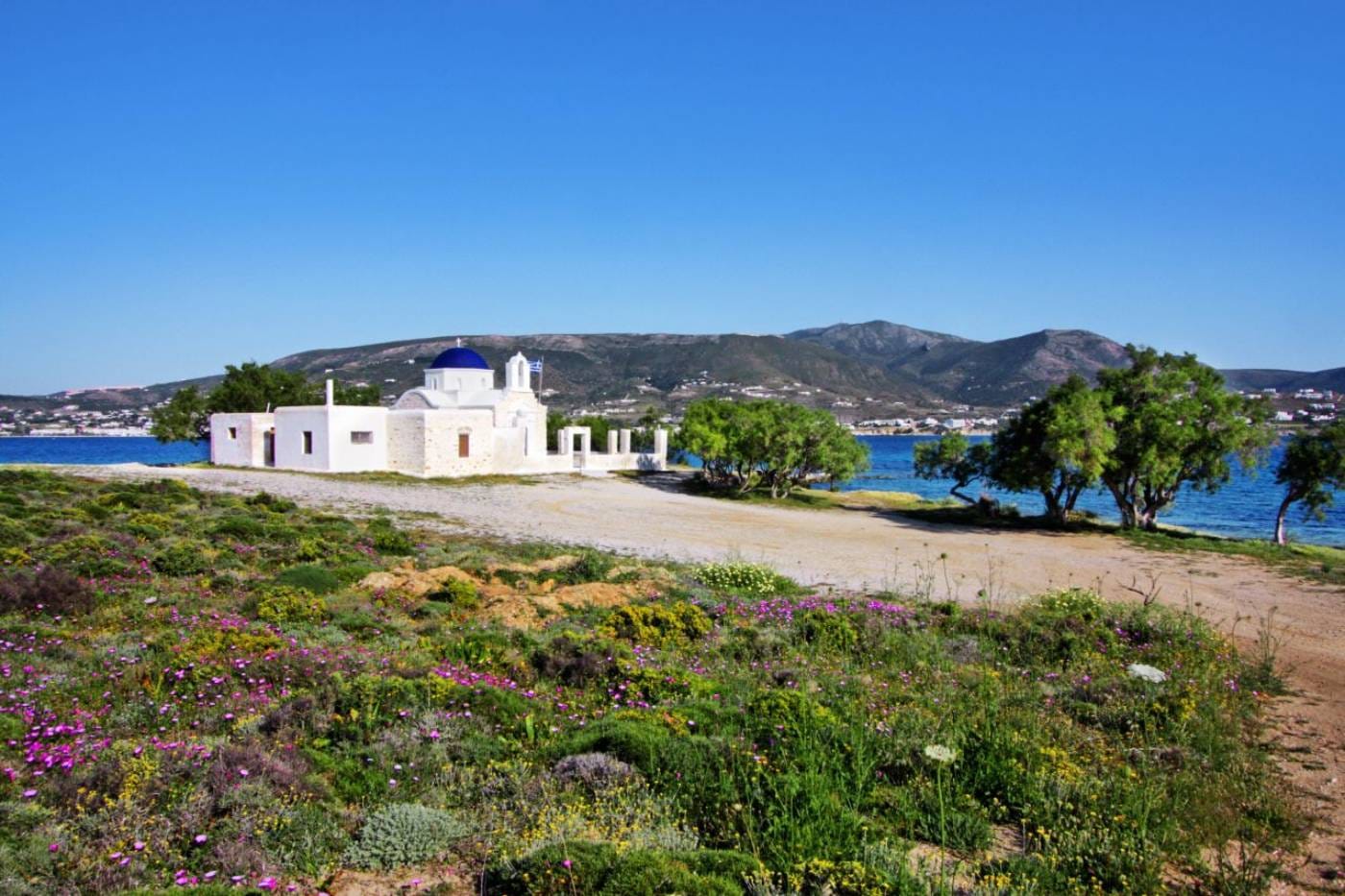
In Parikia, at the northern edge of the bay that forms the island’s main harbor, lies a small chapel that has become a local landmark-the Chapel of Agios Fokas. Its location is exceptionally picturesque, at the entrance to Parikia Bay, overlooking the ships entering and leaving the port and the open sea beyond. The chapel is simple and authentically Cycladic: whitewashed walls, a blue dome, and a backdrop that captivates both photographers and worshippers. Although not a large monastery but a chapel, its importance as a place of worship and as a cultural symbol is remarkable.
Location and Role on the Island
The monasteries of Paros have always had multiple roles: spiritual (worship, prayer, ascetic life), social (hospitality, charity, education), artistic (icons, frescoes, manuscripts), and cultural/touristic (as visitable monuments).
Their locations are often privileged-on hillsides or with panoramic sea views-allowing monks to contemplate the horizon in solitude and prayer.
However, most monasteries are not easily accessible by public transportation. Many are located in remote areas or along dirt roads.
For this reason, it is advisable to have your own vehicle or a rental car or scooter. Rent a car from Acecarsparos is an ideal solution, as it allows you to travel comfortably and visit these spiritual and historical landmarks with ease.
Visiting a monastery gives travelers the chance to combine religious experience with natural beauty and a deeper connection to Cycladic history.
To dive even deeper into Paros’ culture and local traditions, take a look at our guide to the island’s most important festivals and celebrations.
The Chapel of Agios Fokas in Paros. A Religious and Touristic Landmark
The chapel of Agios Fokas, located on a small cove at the entrance of Parikia, offers a peaceful retreat from the lively harbor center.
A visit here combines sea and spirituality: you can swim nearby or simply enjoy a moment of silence, reflection, or photography.
During the summer season, the chapel becomes especially vibrant, hosting weddings and baptisms thanks to its idyllic setting and stunning views of the Aegean blue.
However, access is not easy, as it sits on a relatively secluded cape not served by public transport.
Therefore, it is highly recommended to have your own vehicle or rent one to reach it comfortably and safely, especially during the busy summer months. A reliable local option for car hire in Parikia is Acecarsparos rent a car.
It is best to visit early in the morning or late in the afternoon, when the light is perfect and the crowds are few.
Since it is not an organized beach, bring water, a hat, or an umbrella if you plan to stay by the shore for a while.
For the faithful, the chapel is a quiet place of worship; for visitors, it is an authentic corner of the island, away from the crowds, full of photographic charm and serene spirituality.
Visiting Agios Fokas and Parikia’s monasteries? A rental car makes it easy.
Symbolism and Spiritual Meaning
The choice of Saint Phocas for this particular spot carries multiple layers of symbolism: the sea, the entrance of the bay, the passage of ships, and the idea of protection during travel-all connect to the saint’s life story.
The view from the chapel toward the bay and open sea also works symbolically: as the chapel looks outward to the horizon, the believer is invited to turn inward in contemplation.
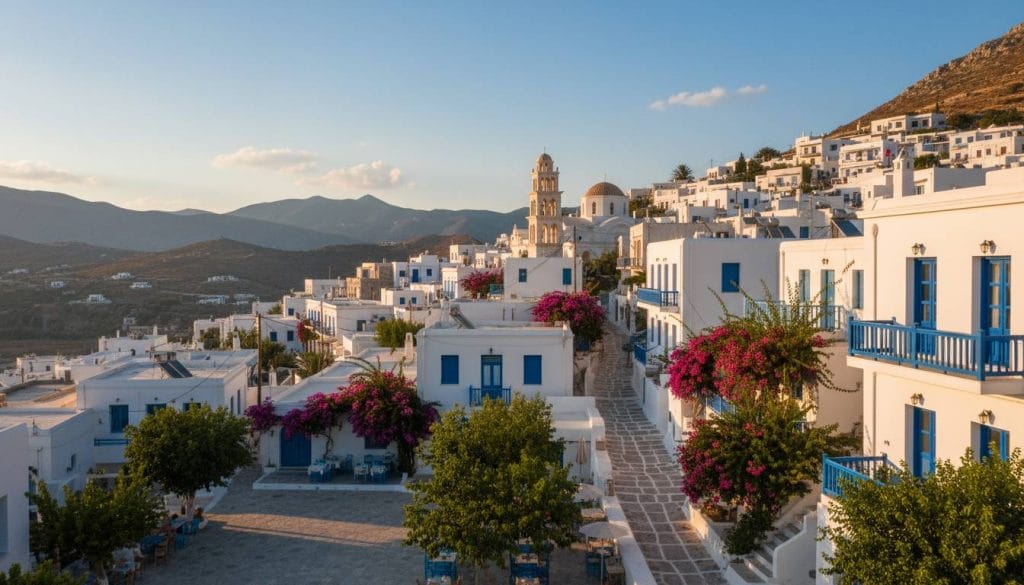
The simplicity of the building-white tones and Cycladic minimalism-integrates faith into the natural landscape without the need for grandeur.
The fact that it is a small chapel rather than a large monastery reinforces the idea that spirituality does not always require magnificence but sincerity, simplicity, and closeness to nature.
Visiting Tips and Suggested Itinerary
If you find yourself in Parikia, it’s worth taking an afternoon stroll to Agios Fokas. Starting from the harbor, you can drive or ride a rented car or scooter toward Krios and Marcello Beach, then continue to the chapel-or even walk if you enjoy a short hike (about 10–15 minutes from Krios).
You can also combine your visit with a swim at the small unorganized beach beneath the chapel for a more independent experience.
Bring water, a hat, and a camera; the view of the ships entering the bay from below the chapel is unforgettable.
It’s the perfect stop for a few quiet moments of reflection before or after a meal in Parikia or a stroll through the old harbor.
If you wish to attend a ceremony or service, check the local church schedule, though the site is often visited more for its scenic beauty than for active worship.
You can book your car for this short trip through ACE Cars Paros, a trusted car rental company based in Parikia.
Make the most of your stay in Paros. Book your car rental now.
Value for the Modern Visitor
A visit to Agios Fokas offers the chance to combine spiritual reflection with a travel experience. The serenity of the spot, the view, and its connection to the sea make it feel like a small pilgrimage.
Moreover, because it lies slightly outside the main tourist routes, between Krios and Marcello Beach. It is ideal for a peaceful break away from the crowds.
Where Faith Meets the Sea
Paros, with its many monasteries and chapels, is an island where religious tradition and island life coexist naturally. The existence of over thirty monasteries in the past and five still active today reflects its long spiritual history.
In this context, the chapel of Agios Fokas in Parikia stands out as a place where sea, landscape, faith, and history meet.
A small and humble chapel, yet with great symbolic and emotional power-both for the believer and the traveler.
Saint Phocas, martyr and patron of sailors and hospitality, continues to inspire and protect. His dedication at a site facing the open sea and horizon holds deep meaning.
If you are planning a visit to Paros, a stop at Agios Fokas is highly recommended-not just for a beautiful photo, but for a brief yet profound sense of peace in a place built to unite earth and sea, past and present, traveler and silence.
If you don’t have your own vehicle, rent a car or scooter from Acecarsparos is the best way to reach this site comfortably and explore the island’s hidden spiritual treasures.
Ultimately, Paros-with its monasteries and especially this small chapel-proves that faith, art, nature, and humanity can coexist harmoniously at the heart of a Greek island.
With a reliable car rental from Acecarsparos, you can easily include Agios Fokas and the island’s monasteries in your itinerary.