Introduction: A Hidden Treasure in the Heart of Paros
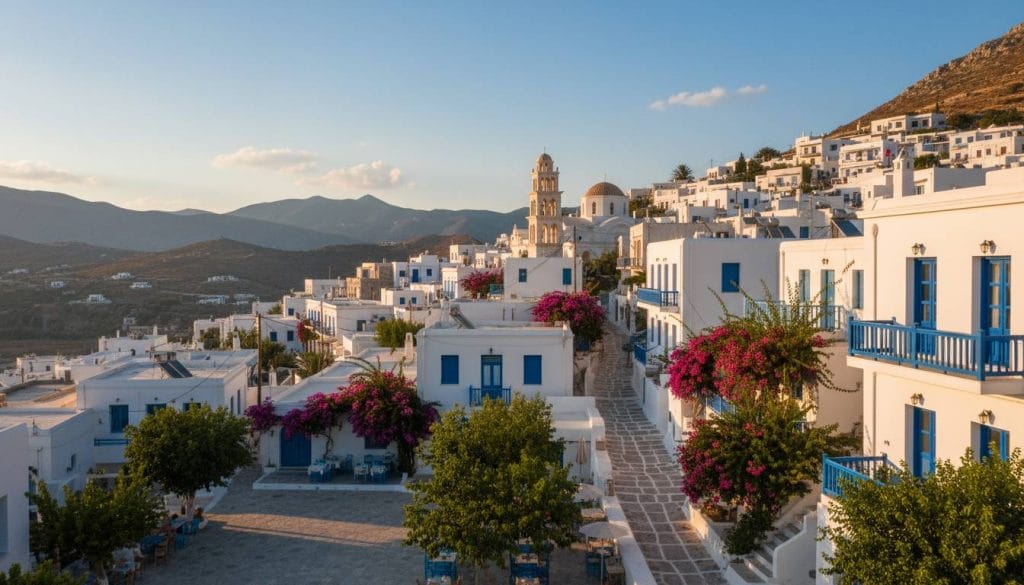
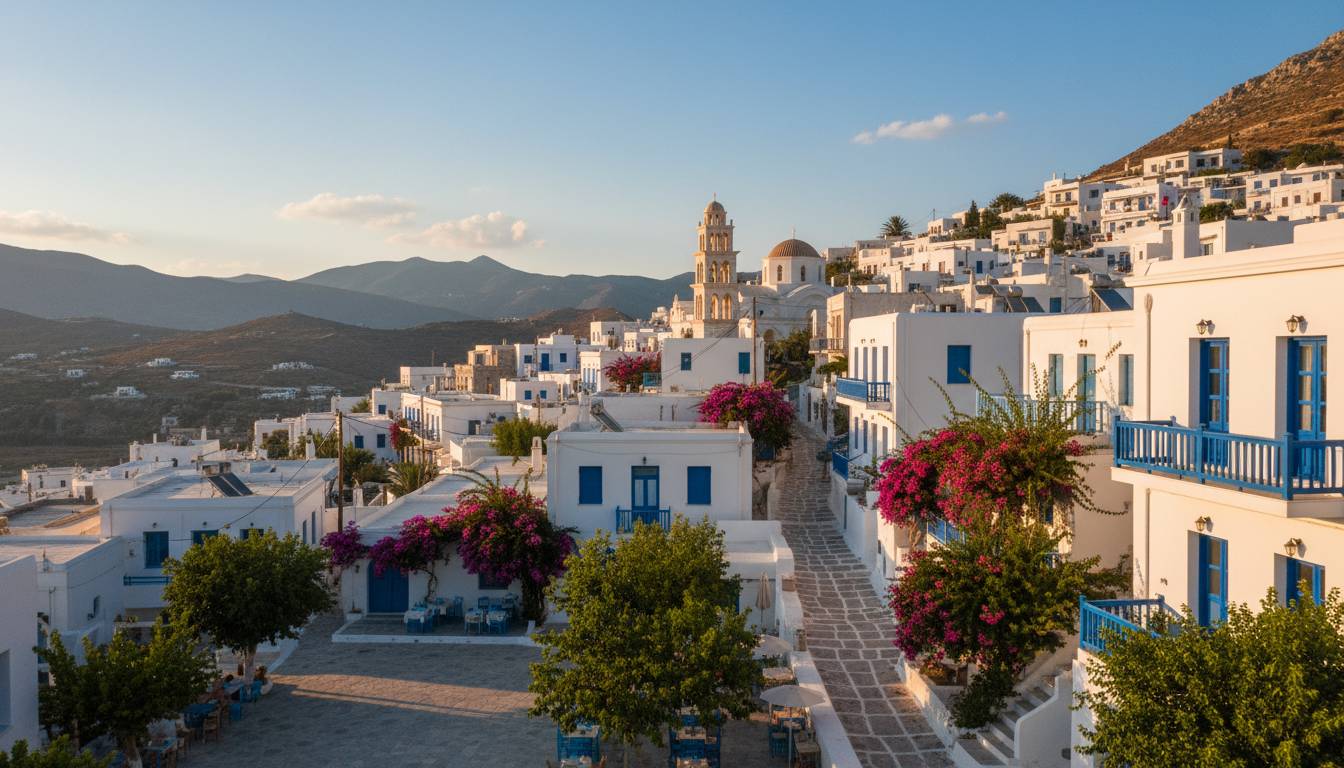
Paros, one of the most beloved islands of the Cyclades, hides within its interior a village that seems to have stopped in time. Lefkes, built amphitheatrically at the foothills of Mount Agios Pantas, is the largest and most beautiful mountain village on the island. Far from the tourist bustle of Parikia and Naoussa, Lefkes offers an authentic experience of Cycladic life that combines tradition with natural beauty. The village owes its name to its white houses that gleam under the Mediterranean sun, although there is also the version that it was named after the poplar trees (lefkes in Greek) that once adorned the area. Whatever the truth may be, a stroll through the narrow alleys of the village is enough to understand why Lefkes is considered the most picturesque village of Paros.
History and Architectural Heritage
Lefkes has been continuously inhabited since Byzantine times, when residents of coastal areas were forced to move to the mountains for protection from pirates. This historical necessity gave the village its unique architecture: narrow, labyrinthine alleys designed to confuse invaders, houses built close to one another, and arches connecting residences creating shaded passages. Walking through Lefkes, you will discover mansions from the 17th and 18th centuries with impressive marble doors and windows, Venetian towers, and traditional courtyards adorned with bougainvilleas and jasmine. The ancestral Parian marble, known worldwide for its quality, decorates many of the facades and floors of the buildings, reminding visitors of the rich quarrying tradition of the area.
The Churches of Lefkes: Spiritual Beacons
Lefkes has more than ten churches and chapels, each with its own history and architectural particularity. The imposing Church of the Holy Trinity, with its marble bell tower, dominates the central square and serves as the spiritual center of the village. Built in the 17th century, it houses important Byzantine icons and an exceptionally crafted wooden iconostasis. A few minutes outside the village lies the historic Monastery of Saint Anthony, an active convent dating back to the 17th century. The monastery, surrounded by lush gardens, offers an atmosphere of serenity and spiritual uplift. Visitors can admire the Byzantine frescoes and purchase handmade embroideries and products made by the nuns.
The Festivals: The Soul of Tradition
If there is something that distinguishes Lefkes from every other village in Paros, it is the traditional festivals organized throughout the summer. These celebrations are not simply tourist events. They are living expressions of a cultural heritage that has been preserved unchanged for centuries. The biggest festival takes place on August 15th, during the celebration of the Assumption of the Virgin Mary. The central square transforms into a huge celebration with live traditional music, dancing until dawn, and abundant local wine flowing freely. The locals, dressed in traditional costumes, dance waltzes and syrtos, while visitors are welcomed to participate in the festivities. Other important festivals include the feast of the Holy Trinity, the celebration of Saint Anthony in January, and various local festivals that combine religious ceremonies with gastronomic delights. During these festivals, the women of the village prepare traditional dishes such as revithada (chickpea stew), karavolakia (snails), and the famous Parian mizithra cheese.
Gastronomic Delights: The Tavernas of Lefkes
The gastronomic scene of Lefkes is in itself a reason to visit. Unlike the tourist restaurants of coastal areas, the tavernas of the village offer authentic Parian cuisine at prices that respect the visitor.
In the central square, under the shade of plane trees, you will find traditional tavernas where the owners cook with recipes inherited from their grandmothers. The dishes are prepared with local ingredients: fresh vegetables from the gardens of the area, goat meat from nearby pastures, and seafood that arrives daily from Naoussa.
Do not miss trying the famous suckling pig of Lefkes, which is slow-roasted in a traditional wood-fired oven. Revithada, the emblematic dish of Paros, is served here in the traditional way, cooked overnight in a clay pot. And of course, no meal is complete without a glass of local wine from the vineyards of Paros, which produce excellent varieties such as Monemvasia and Mandilaria.
6. Nature and Hiking: Trails with a View
Lefkes is the ideal base for nature lovers and hiking enthusiasts. The village is surrounded by a network of trails that lead to hidden beauties of the island, offering unique exploration experiences.
The most famous trail is the Byzantine Road, an ancient cobblestone path that connected Lefkes to Naoussa. Walking this route, you will cross olive groves, pass by old watermills, and enjoy panoramic views of the Aegean. The route takes approximately two hours and is suitable for all fitness levels.
Another excellent option is the ascent to the peak of Agios Pantas, which at 771 meters is the highest point of Paros. From there, on clear days, the view extends to Naxos, Ios, and even further. The area around the village also hosts rare species of flora and fauna, making it ideal for birdwatching and photography.
Transportation: Why a Rental Car Is Essential
One of the practical issues that visitors to Lefkes face is transportation. The village is located approximately 10 kilometers from Parikia and 12 kilometers from Naoussa, in a mountainous location that is not adequately served by public transportation.
The local bus service of Paros, although it exists, operates with limited schedules, especially to the mountain villages. Buses pass infrequently, and the last return routes are often early in the afternoon. Which means that if you want to enjoy a dinner in Lefkes or participate in a festival, you will need your own means of transportation.
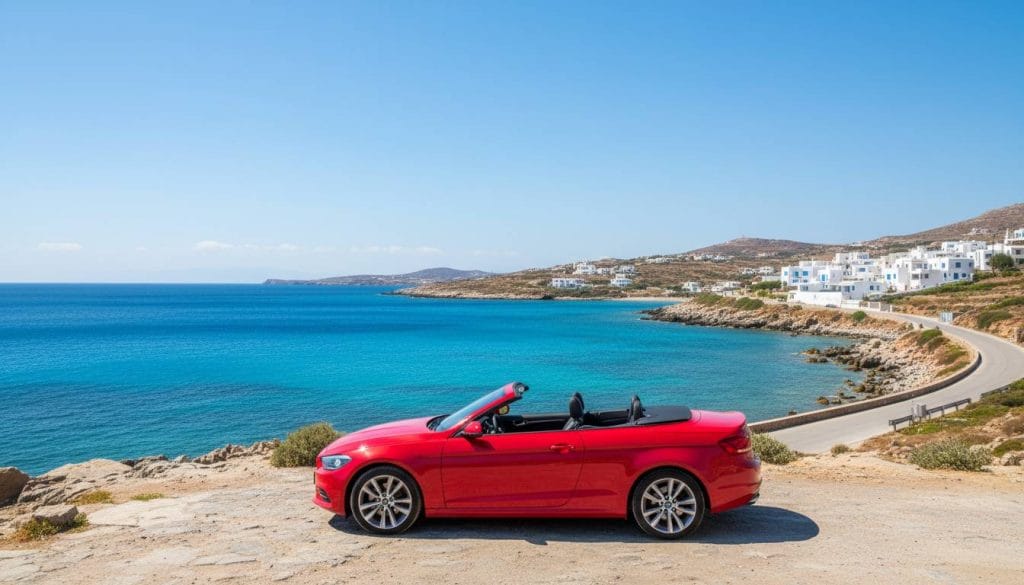
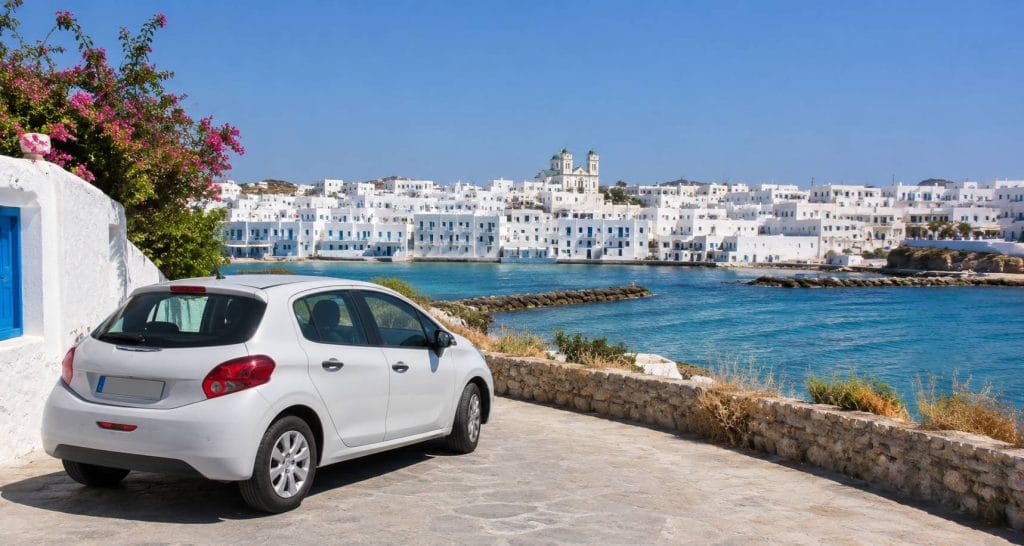
For those who do not have their own vehicle, renting a car is the best solution. Besides access to Lefkes, a rental car gives you the freedom to explore other hidden corners of the island, such as the isolated beaches of the eastern coast, the village of Marpissa, and the ancient marble quarries.
Art and Culture: A Village That Inspires
Lefkes has long been a source of inspiration for artists, writers, and creators. The atmosphere of the village, with the special light of the Aegean and the authentic Cycladic aesthetic, has attracted various Greek and foreign artists who settled here to create.
In the center of the village operates the Folklore Museum of Lefkes, housed in a renovated mansion from the 19th century. Here you will see traditional costumes, agricultural tools, household utensils, and photographs that capture the daily life of the village in previous decades. The museum is a window to the past and helps visitors understand the deep connection of the community with its roots.
During the summer months, the village hosts various cultural events, traditional music concerts, and exhibitions by local artists. These events offer an excellent opportunity to experience the contemporary culture of the island in an authentic setting.
Practical Information for the Visitor
Best time to visit: Lefkes is beautiful all year round, but the ideal period is from May to October. August is particularly lively due to the festivals, but also more crowded. For a quiet visit, prefer May, June, or September.
Accommodation: In Lefkes and the surrounding villages, there are traditional guesthouses and rooms for rent that offer authentic hospitality. Staying here allows you to experience the nightlife of the village and start early in the morning for hikes.
What to note: The alleys are paved with uneven stones, so comfortable shoes are essential. Also, many shops and tavernas close at midday for siesta,respect this custom.
Money: Although there is an ATM in the village, it is good to have cash with you, as some small businesses do not accept cards.
Why Lefkes Is the Most Beautiful Village
What makes Lefkes the most beautiful village of Paros? The answer is not found in any single element, but in the unique combination of everything this place offers.
It is the way the afternoon light gilds the white walls. It is the smell of roasting meat rising from the tavernas. It is the sound of music echoing through the alleys on festival nights. It is the view that opens before you as you climb the steps toward the church. It is the hospitality of the locals who welcome you as if you were old friends.
In an era when many Greek islands have succumbed to mass tourism, Lefkes remains an authentic place. Here life flows at its own pace, traditions are observed with respect, and beauty is not staged for tourists. It is simply the way people have lived here for centuries.
If you are looking for the real Paros, if you want to feel the pulse of a Cycladic village that has not lost its identity, Lefkes awaits you. Also explore the quietest villages of Paros with a beautiful road trip.